

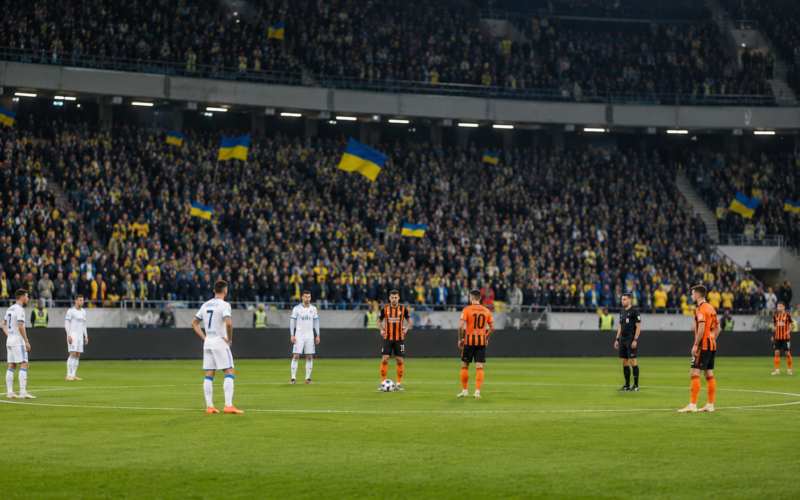
Football is often remembered through its most dramatic moments: a last-minute goal, an extraordinary save or a victory that changes the direction of a season. Yet the identity of a league is built through much more than isolated incidents. It emerges from the traditions of its clubs, the development of its players and the determination shown across an entire campaign. Exploring Ukrainian Premier League match replays offers a way to look beyond individual results and appreciate the different stories shaping Ukrainian domestic football.
The Ukrainian Premier League has a distinctive place in European football. Its clubs carry histories connected to industrial cities, regional communities and generations of supporters. Some are recognised for their success on the domestic stage, while others have built their reputations through youth development, ambitious projects and memorable performances against stronger opponents. Together, they create a competition with a rich sporting identity and a constantly changing landscape.
A Football Tradition Built Across Generations
Ukrainian football has a long history that extends beyond the modern league structure. Its traditions were shaped by influential clubs, celebrated players and important achievements that helped establish the country’s reputation in the sport.
For many supporters, football memories are closely connected to family stories. Older generations remember legendary teams and historic European nights, while younger fans develop their own attachments through contemporary players and new rivalries. This continuity gives domestic competitions an emotional dimension that cannot be measured through league positions alone.
Clubs such as Dynamo Kyiv and Shakhtar Donetsk have played major roles in shaping the country’s football identity. Their histories include domestic titles, European campaigns and different approaches to building successful teams. Their meetings have often carried significance beyond the three points available, representing contrasting football philosophies and the ambitions of two major institutions.
However, the wider league cannot be understood through its leading clubs alone. Teams from other cities contribute their own traditions, supporter cultures and competitive ambitions. Their presence ensures that Ukrainian football remains a national sporting story rather than a rivalry between only a handful of familiar names.
Rivalries That Give Fixtures Their Meaning
The emotional intensity of a football match often begins long before the referee blows the opening whistle. Historical meetings, local pride and previous results can influence the expectations surrounding a fixture.
Some rivalries are defined by championship battles, while others reflect regional identity or the desire to challenge a historically stronger opponent. These encounters can produce particularly engaging football because the players understand the importance of the occasion.
Dynamo Kyiv and Shakhtar Donetsk remain central to the modern story of Ukrainian football. Their contests have featured contrasting styles, talented attacking players and intense tactical battles. Yet other fixtures can be equally compelling, especially when clubs with ambitious supporters meet during an important stage of the campaign.
A replay makes it possible to appreciate the atmosphere and emotional development of these games. The reaction to a strong challenge, the tension following a missed opportunity and the celebrations after a decisive goal all help explain why particular fixtures remain memorable.
Tactical Identity: More Than Possession and Goals
The Ukrainian Premier League features a variety of tactical approaches. Some teams prefer to control possession and construct attacks through short passing combinations. Others place greater emphasis on compact defensive organisation, quick transitions and the ability to exploit space behind the opposition’s back line.
These differences can make individual fixtures unpredictable. A technically strong side may struggle against an opponent that presses aggressively and disrupts its rhythm. A team that spends much of the match defending can still create serious problems through well-timed counterattacks.
Midfield is frequently where these tactical contests become most visible. The ability to win second balls, protect possession and recognise spaces between the opposition’s lines can determine which team controls the match. A midfielder who consistently offers a passing option may be just as influential as the player who eventually scores.
Defensive positioning is equally important. Teams must decide how high to hold their defensive line, when to press and how to respond when an opponent switches play quickly. Small adjustments can change the balance of a game, particularly when both sides are carefully organised.
Watching the full contest helps reveal these decisions. Rather than focusing only on the final shot, viewers can follow the movements and combinations that created the opportunity.
Youth Development and the Next Generation
One of the most important features of Ukrainian football is its connection with youth development. The country has produced players who have gone on to compete at high levels in European football, and domestic clubs continue to provide opportunities for emerging talent.
Young footballers often enter the senior game in demanding circumstances. They must adapt to the physical intensity of professional competition, understand tactical responsibilities and learn to make decisions under pressure. Their progress is rarely a straight line. A promising performance may be followed by a difficult match, but these experiences are part of the process through which players mature.
Academy development also influences the identity of individual clubs. Some organisations place considerable emphasis on technical education and positional awareness, while others seek to combine homegrown talent with experienced professionals. The balance between these approaches can shape a team’s style over several seasons.
Full-match viewing is particularly valuable when following young players. A goal or assist may attract immediate attention, but their movement away from the ball can reveal much more about their understanding of the game. The timing of a run, the willingness to track an opponent and the ability to maintain concentration throughout a match are important indicators of development.
The Influence of Experience and Leadership
Young talent can bring energy and creativity, but successful teams also need experienced players who understand how to manage difficult moments. Leadership is especially important when a match becomes tense or when an opponent begins to build pressure.
A captain may help organise the defensive line, encourage teammates after a mistake or slow the tempo when the team needs to regain control. Experienced midfielders often provide a similar influence by choosing when to accelerate an attack and when to retain possession.
Goalkeepers also play a significant leadership role. Their position gives them a clear view of the defensive structure, allowing them to communicate with defenders and identify potential dangers before they develop. A well-timed instruction or confident intervention can prevent a difficult situation from becoming a major threat.
These contributions are not always included in short match summaries. Rewatching the entire performance offers a better understanding of how leadership operates across the ninety minutes.
Football Under Extraordinary Pressure
The recent history of Ukrainian football cannot be separated from the extraordinary circumstances in which the country’s sporting institutions have had to operate. Clubs, players, coaches and supporters have faced disruption and uncertainty, while the organisation of domestic competition has required considerable adaptation.
This context gives many fixtures an additional dimension. Football remains a source of community, continuity and emotional connection. For supporters, following a club can represent a link to familiar places and shared experiences, even when circumstances make ordinary routines difficult.
The resilience shown by people involved in the game deserves recognition, but it should not overshadow the football itself. Players still prepare for opponents, coaches still make tactical decisions and supporters still discuss performances, selection choices and the development of promising talent.
The competition therefore continues to be judged through sporting qualities: commitment, creativity, organisation and the ability to compete under pressure. These elements are central to understanding the league’s character.
Why the Full Ninety Minutes Matter
Highlights provide a convenient overview of the most important incidents, but they cannot reproduce the complete rhythm of a football match. They usually focus on goals, saves, penalties and major controversies. The quieter periods, when teams build attacks or reorganise defensively, receive much less attention.
A full match reveals how the result developed. It allows viewers to notice when a team begins to lose control of midfield, how a coach responds to an opponent’s tactical change and whether substitutions improve the balance of the side.
Consider a goal scored after a rapid counterattack. The decisive pass may be the moment everyone remembers, but the beginning of the move could have been a defensive interception several seconds earlier. The replay can reveal how the team recognised the opportunity and moved forward before the opposition had time to recover.
The same applies to defensive performances. A side that keeps a clean sheet may have relied on coordinated pressing, intelligent positioning and constant communication rather than a series of spectacular saves. These details help explain why a particular performance was successful.
For supporters interested in the development of clubs and players, the full match provides a much richer picture than a short collection of highlights.
The Atmosphere Beyond the Touchline
Football is also a social experience. Stadiums bring together people with different backgrounds who share an attachment to the same team. Chants, flags, familiar rituals and collective reactions create an atmosphere that becomes part of a club’s identity.
Ukrainian supporters have long been known for their loyalty and strong connection with their teams. Their presence gives domestic fixtures an emotional character, particularly when important opponents meet or when a club is fighting for a significant result.
The relationship between a team and its supporters can influence the mood of a match. Encouragement after a difficult spell may help players regain confidence, while frustration can increase the pressure during a tense finish. These exchanges are part of the wider story of football.
Even small gestures can become memorable: a player acknowledging the crowd, teammates gathering around a young debutant or supporters celebrating a hard-earned defensive performance. Such moments demonstrate that the meaning of a match extends beyond the scoreboard.
A League with Its Own Identity and Future
The Ukrainian Premier League continues to evolve through changes in coaching, player development and club ambitions. New generations are entering professional football, tactical ideas are changing and teams are adapting to different competitive demands.
Its appeal comes from the combination of sporting quality and historical depth. Established clubs provide continuity, emerging sides bring new challenges, and individual players add personality to the competition. Every season creates fresh stories, whether through a championship contest, an unexpected result or the breakthrough of a promising young footballer.
Returning to complete matches helps bring these stories into focus. It shows how teams respond to adversity, how individual players develop and how tactical decisions influence the outcome. More importantly, it preserves the details that make each fixture distinct.
Ukrainian football is not defined by one club, one rivalry or one memorable result. Its identity is formed through the experiences of an entire football community. The most rewarding way to appreciate that identity is to look beyond the final whistle and discover the story that unfolded across the whole match.